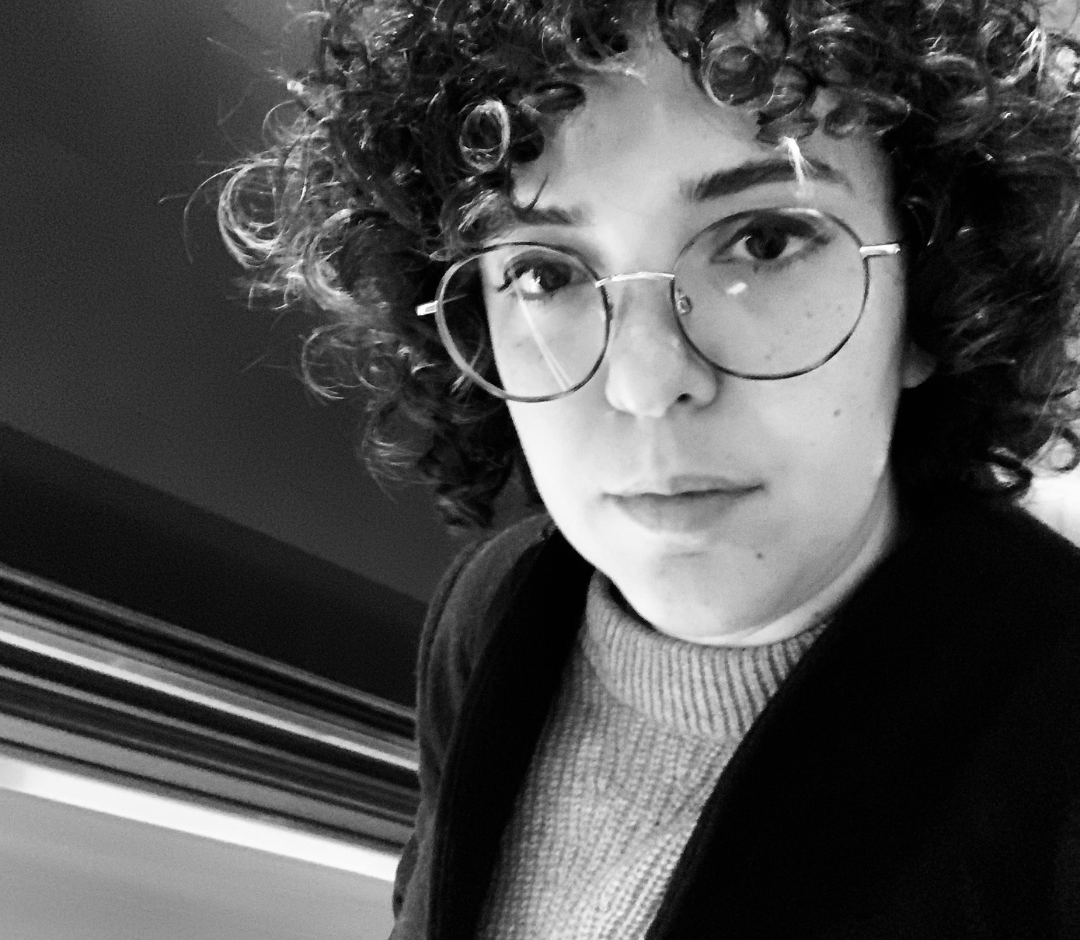
Artist with foreign background still faces barriers
A study reveals that Finnish culture has deeply embedded structures that hinder foreign-born artists from practicing their profession. Dahlia El Broul’s observations as an artist in Finland align with these findings.
Working as a foreign-born artist in Finland is complicated by feelings of exclusion and linguistic challenges.
The information comes from a report by the Center for Cultural Policy Research (Cupore) published in 2023, which addresses the status of foreign-born artists in Finland. The report was a commission of the Ministry of Education and Culture.
According to Statistics Finland, in 2019, individuals of foreign background constituted 4% of all professional artists in Finland. The artists were identified based on the extensive ’Artists in Finland’ research data. This proportion was lower compared to the share of people of foreign background in the entire population (8%) or the working-age population (10%). Statistics Finland defines a person of foreign background as someone whose both parents (or the only known parent) were born outside of Finland.
According to the report, key challenges faced by artists who have moved to Finland include a lack of networks, a sense of exclusion, and difficulties in being accepted into the Finnish art world. However, those who study art in Finland or continue their studies in Finland find the situation somewhat easier. It is more difficult for those who studied abroad to gain recognition within the Finnish art field.
Dahlia El Broul, a cultural worker, and illustrator from New York City who lives in Finland, shares a similar experience. She is familiar with the Finnish educational requirements as she has a Master of Arts degree from Aalto University. El Broul has also observed that employers tend to hire people who have been educated at a well-known, culturally relevant university. Prejudice and lack of appreciation towards artists of foreign background and their education persist in the structures.
-There are often implicit biases that exclude many people who aren’t Finnish, an assumption that they understand the rules and have a tacit agreement with the ways in which you are expected to behave, El Broul says.
There are often implicit biases that exclude many people who aren’t Finnish, an assumption that they understand the rules and have a tacit agreement with the ways in which you are expected to behave.
Structural Differences
What do we know about foreign-born artists in terms of numbers? The report prepared by Cupore examines the recipients of individual grants awarded by the Arts Council system from 2002 to 2012. The number of applications from foreign-language artists has increased over this period, particularly in the field of visual arts.
Among all artists who received grants from 2017 to 2019, 32% of the recipients were foreign-born artists, compared to 23% Finnish-born artists. However, the statistics show that the median and average grant amounts received by artists of foreign background were 1000 € less than those received by Finnish-background artists. The report notes that in the pilot phase, the dataset primarily included foreign-born artists based on grant and organization criteria. Therefore, the data may highlight those artists who have received grants or belong to artist organizations.
Only 8.4% of employed artists have a foreign background. In the performing arts, the highest percentage of working foreign-born artists is found among dancers and choreographers (18.1%). The difference is partly explained by the varying structures of the art fields.
El Broul explains from her experience that an artist of foreign background is more likely to work via freelance gigs rather than hold a permanent position, let alone on a long-term contract. And this will only be exasperated by the future cuts to both culture and to the social benefits, exceeding what is already anticipated.
The Requirement for Perfect Language Proficiency is Unreasonable
The Cupore report highlighted the experiences of respondents regarding language-based discrimination and unequal treatment, drawn from open responses in the Arts and Culture Barometer over different years. These experiences were particularly noted among those who answered the survey in English. Respondents felt that a lack of proficiency in Finnish placed foreign-born individuals and those whose native language is not Finnish in an unequal position. The requirement for perfect Finnish language skills was considered unreasonable in relation to the realities of an artist’s working life.
The grant application template is not available in English, so it must be translated. The language is sometimes so specific that one cannot be entirely sure what is being asked in the application, El Broul explains.
The current cuts to the arts and culture sector are affecting artists who are already struggling to get grants. El Broul talks about her foreign colleagues who are already struggling with visa challenges and are either leaving Finland or planning to do so. She finds it paradoxical that the cuts will have the most significant and damaging impact on those who promote international growth in a country whose selling point is internationalism.
-Finland is an attractive country for international artists to come and study, but what are the consequences when graduates eventually leave the Finnish artistic and cultural scene? El Broul asks.
Finland is an attractive country for international artists to come and study, but what are the consequences when graduates eventually leave the Finnish artistic and cultural scene?
Dahlia El Broul’s interview was conducted in English. When discussing the artist profession, it includes not only creating art but also other jobs, such as teaching and work done in associations.
Uusimmat artikkelit


Taiteilija on Suomen Taiteilijaseuran julkaisema kuvataiteilijan ammattilehti verkossa.